
What is trivia?
Trivia – noun. (Technically plural, but in daily use, more often used as a singular in itself.)
Definition: Knowledge, details, or matters which are deemed nonessential, inconsequential, or unimportant.
Though one might assume that it is cognate with the word “trifle” with which it shares a similar meaning, it is in origin much older, derived from the Latin trivium – “tri-” and “-vium” meaning “three roads”, or “the place where three roads meet”.
The term in common use originated from the classical liberal arts education, the standard education for free Greek and Roman citizens aspiring to be cultured and participate in public life (liberalis: “worthy of free men”), as opposed to the “practical education” of vocation, craft and trade. A classical liberal arts education traditionally had seven disciplines. The trivia (singular: “trivium”) were the three lower disciplines which were considered foundational or primary: grammar, logic and rhetoric. Learning the trivia was necessary to proceed and learn the quadrivia, the four higher disciplines of the liberal arts: arithmetic, geometry, music and astronomy. Because the trivia were more basic and the quadrivia more advanced and prestigious, trivia gained the connotation of “lesser knowledge” and later evolved into the meaning of “useless knowledge” – even though the trivia were by virtue essential – the fundamentals of the liberal arts.
This was not the only usage of the term trivia: it was also used in reference to a crossroads, as a joining point of three roads. And in Western folklore, the crossroads was often held as a symbolic threshold between the realm of the natural and the supernatural; the intersection of material and magical; a meeting place of world and underworld. Its implications were of mischief, mysticism, and sorcery; even as late as modern times, the crossroads was recognized as a place to summon demonic powers, and make a deal with the devil – as seen in 1926 film adaptation of Faust, and numerous 20th century American blue songs about men selling their souls.
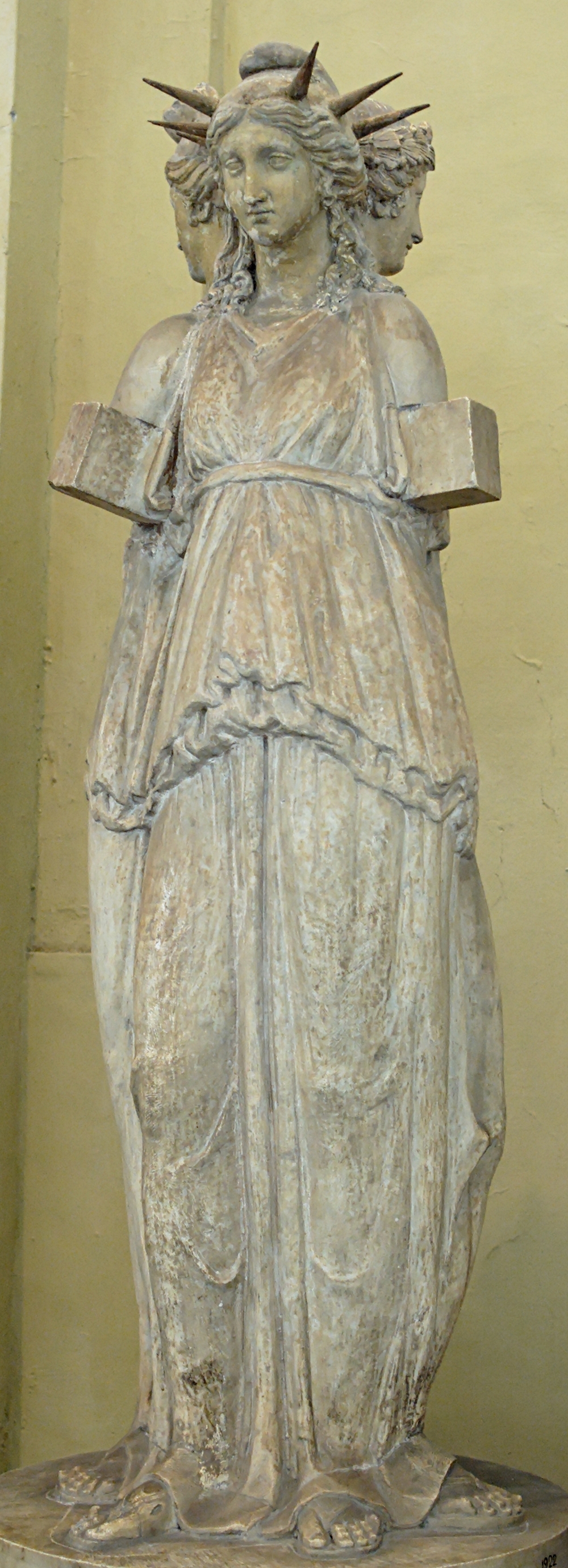
In Greek mythology, Hekate was a triple-faced or triple-bodied goddess of the three way crossroads – and, accordingly, of magic, witchcraft, and necromancy. The later Roman equivalency lent these traits of Hekate to the Roman goddess Diana – even though Diana was equated first and foremost with Artemis, Greek goddess of nature and the hunt. Diana also took on the traditional associations with Luna, Roman goddess of the moon – and her Greek equivalent, Selene. In effect, Diana was herself triple deity, merged from three influences and taking different forms; and when her worshipers portrayed in the form of the bewitching goddess of the crossroads, she was given the epithet: Diana Trivia, “Diana of the three paths”. And it is her associations with magic and nature that still give Diana Trivia symbolic import in neopagan religions and subcultures to this day.
“Triviality” is the trait in mathematics of solutions which are null, or otherwise so simple in structure that they are considered unrevealing. “Trivial”, rendered from the sense of “lesser” to mean “commonplace”, referred to the common names of chemical compounds which don’t obey the systematic rules of scientific nomenclature; and in a similar way, “Trivia” meaning “common”, became the name of a genus of sea snails and marine gastropods, which resemble cowries, even though they aren’t closely related. “Trivia”, used in both the sense of crossroads and the commonplace, was the title of a 1716 satirical poem by English dramatist John Gay, about walking the streets of 18th century London.
In the early 20th century, trivia meaning “bits of information of little consequence” gained popular usage through American-born British aphorist Logan Pearsall Smith, in his works Trivia and More Trivia, which were collections of essays tied to silly observations of public life.
And so it was, in the 1960’s, that American college students first applied the term trivia to quizzes for the sake of entertainment. The first mention of “trivia” as a parlor game of trading knowledge questions is attested to an article in the Columbia Daily Spectator in 1965 by Ed Goodold, who then collaborated with his colleague Dan Carlinsky to organize a “trivia contest”. The following year, they published a quiz book that achieved ranking on the New York Times best seller list, entitled “Trivia”. This introduced the usage of trivia as a “quiz of general knowledge” to the wider public, a connotation which became set in stone with the 1981 release of the popular board game Trivial Pursuit.
Trivia is many-faced word, like the goddess that bore its epithet: it variously means fundamental and unnecessary; commonplace and mythical; natural and supernatural; it is too simple and too complicated; it is unimportant, and yet, to me, it is so, so meaningful. All of this, and more, is trivia; and you may take that as you will.
I love trivia; I’ve loved it for as long as I remember and I will love it till the day I die. And even then, I haven’t ruled out putting a neat factoid on my tombstone.
For those of you who know of the songs I wrote where I named every country and capital of the world, this should come as no surprise. What can I say? It’s the perfect hobby for people who are both intellectually curious and self-competitive.
And I’m not alone. I attend a pub quiz every Tuesday (7pm at The Lookout in Seattle), where I am surrounded by people who have the same unbridled joy for trivia as I do. I largely go there because it just so happens the quizmaster there clearly cares about trivia himself; he clearly takes care in crafting and selecting questions. For this quizmaster, it’s personal, and it’s focused on what makes trivia so engaging. And that’s why it’s high quality, in my opinion.
But not all pub quizzes are so lucky.
I have been to pubs that seemingly view trivia as little more than a go-to solution to increase bar attendance on a quiet weekday evening. Some borrow a humdrum questionnaire from the first website they visit and instruct the bartender to read it out loud as apathetically as possible. Others shrug and hire the slick mass-produced trivia experience offered most prominently by Geeks who Drink. In either case, they see trivia as a means to an end, and therefore they miss the point.
I have trouble explaining this to people who don’t recognize it already, but good trivia is more than just getting drunk and taking a school test. Good trivia doesn’t have to pardon itself and make itself more palatable with extraneous elements that add entertainment. Good trivia is enjoyable in and of itself; it can be inspiring, tense and cathartic for the player.
If you want proof that trivia itself is naturally engaging, consider that most of the earliest broadcast game shows (on radio) were trivia competitions. Jeopardy! has been on the air since 1964 (with short intermittent periods without broadcasting) and its admirably austere format has remained virtually unadulterated that whole time. The quiz show competitors added better production values, higher stakes, larger personalities and the latest gimmicks, and Jeopardy! outlasted them all with just little more than an understated host, three contestants, and a lot of trivia. (It doesn’t even have a studio audience!) Its pure simplicity was the key to its longevity, not an impediment!
Usually, to get that enthralling experience, the player has to have correct mindset and personal investment (i.e. I can’t convince you to like trivia if you’ve decided you don’t care), but it’s the quizmaster, above all, who has the biggest impact in setting the experience and making it enjoyable. And if the quizmaster is deficient in the mindset and personal investment, then even the second coming of Ken Jennings won’t have a good time. (Hell, such a player might have the worst time of all!)
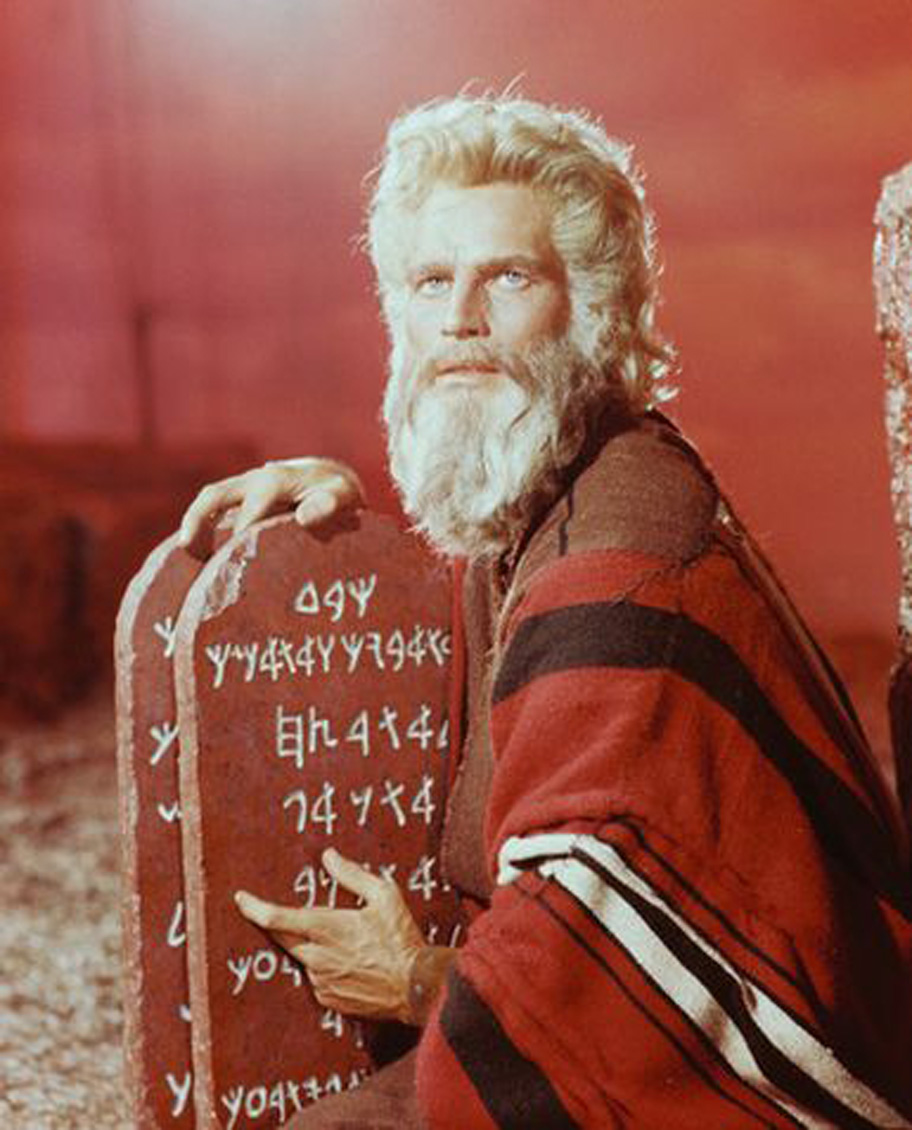
And to my mind, being a good quizmaster isn’t hard; it just requires effort and care. So I have taken my personal experience as a player about what makes trivia good or not good, and distilled them into ten simple rules to making good trivia. Let these commandments be your law and guide if you find yourself in the unusual position of leading a pub quiz forced to make all of your own questions up.
I’ll start out listing them all out, and then follow it up with some commentary. Here they are, straight from my personal Mount Sinai.
Raikespeare’s Ten Commandments of Good Trivia
- Simple Answers: The correct answer should be simple and straightforward (ideally it should seem obvious in retrospect)
- Engaging Questions: A question should be engaging (interesting, dynamic), particularly to someone who doesn’t immediately know the answer
- Broad Knowledge: The selection of questions should reward the prudent use of a broad base of knowledge
- Non-Ambiguity: The correct answer should be unambiguous (to the best of the quizmaster’s ability)
- Challenge: Questions should add an element of challenge, and shouldn’t be too easy for a quiztaker relying on basic knowledge
- Non-Pedantry: Quizzes shouldn’t be pedantic; they should not request information that is overly detailed, or require highly specialized, inaccessible knowledge
- Multiplicity: Questions should present enough information for a quiztaker to arrive at the right answer from multiple avenues/lines of thought
- Social Play: If playing with teams, Questions should encourage the discussion and sharing of information among teammembers to build consensus and identify the right answer
- Themes: Thematic categories are useful, so long as they approach questions from many angles and their application doesn’t conflict with the other rules (e.g. Broad Knowledge; Non-Pedantry; Multiplicity; Social Play)
- Fun: Quiztakers are here to have fun. Trivia should be fun in itself.
Commentary
Rule #1: Simple Answers
I think everyone understands this intuitively, even if they don’t notice it consciously. Let’s analyze Jeopardy!’s most well-known gimmick – one of the few features of the show which I can actually call a gimmick: answering in the form of a question.
I’ll dissect this in more detail later, but for now consider this: since Jeopardy contestants are obliged to answer in the form of a question, what kind of “questions” do the contestants use? What interrogative words (i.e. “question words”) do they use the most?
While I can’t back this up with hard data, I can confidently say that contestants overwhelmingly use “what” as their go-to, with a notable usage of “who” when referring to a person. They rarely (if ever) say “when” or “where”. They don’t ever say “how” or “why”.
Here’s my (admittedly ironic) question: why? Why don’t Jeopardy contestants say, “why”?
If you ask me, it’s because of this unstated rule at the heart of trivia: the correct answer should be simple and straightforward.
“What” and “who” are both interrogative pronouns in this context. They both imply discrete, narrow subject matter; the answer they provide in each case is restricted to a single noun, proper noun or phrase: “What is redwood cedar,” “Who is Napoleon,” “What is The Sun Also Rises,” etc.
By contrast, “how” and “why” are interrogative pro-adverbs; the subject matter that they imply is complex and relational – “how” implies “what method/manner” and “why” implies “what reason/cause”.
“How is x” and “Why is x” are both incomplete, assuming x is a noun/proper noun. (It requires at minimum an adjective, participle or modifier statement to complete it, such as “How is redwood cedar red,” “How is Napoleon doing,” “How is The Sun Also Rises a classic,” etc.) Because of the natural preference for simple, discrete, narrow, concrete solutions, Jeopardy! almost always selects prompts where the correct response begins with “what is”, “what are”, “who is” or “who are”.
Now why do people prefer trivia where the question is framed for simple, discrete answers? Well, some reasons are closely related to other rules (see rule #4 in particular), but broadly speaking, complex answers are weaker, more open-ended, more presumptive, and less falsifiable. Keeping answers simple and straightforward prevents the wishy-washy subjectivity that comes with relational questions.
A good trivia question is like a fully constructed lock that’s opened with a specific key; all that’s left for the quiztaker to do is to identify the correct key. By contrast, a trivia question that disobeys the first rule is like showing the quiztaker an unfinished lock, and asking the quiztaker to imagine and sketch out the rest of the lock and fill it in with a key based on their own assumptions.
Rule #2: Engaging Questions
Remember that I said earlier that trivia is more than just taking a school exam on several servings of alcohol? This rule sets that difference.
Exam questions are not designed to be engaging; they’re designed to determine whether you have the testable knowledge the educators are looking for. That’s why they typically draw a stark line between knowledge and ignorance; often the question gives you the bare information you would need to ideally: “What commander won the Battle of Hastings?” “What is the capital of Hungary?” “Who wrote War and Peace?” You either know it, or you don’t.
That is not how good trivia frames their questions.
A question such as “What is the capital of Hungary” is only as engaging as the effort the quiztaker’s inclined to give to find the correct answer. For people who know that the answer is Budapest, the moment they recall it, they cease to be engaged. For people who don’t know the capital of Hungary, this question is never engaging; it only reminds them of their ignorance. In short, this is a basic question, and one of the least interesting ways to frame it.
Now consider a closely related question, which I would argue is more engaging: “Historically two separate towns divided across the Danube River from each other, they were formally combined in 1873 to form this European capital, now known by the merger of the two towns’ names. What is the city?”
Somebody who knows about Budapest is still engaged with the process of sifting through the information and focusing on the parts that will lead them to Budapest. Throughout that process, there’s a greater chance that a knowledgeable quiztaker would still learn something new (did you know that Buda and Pest were once two separate cities?!) or at least be reminded of a novel fact.
By similar token, someone who doesn’t know the answer is still engaged in the question. It sparks more curiosity and interest, and provides them with more information for a slightly more informed guess. Even if they don’t get it correct, they still end up with a neat factoid as a consolation.
Finally, there’s often a third category of quiztakers who operate in the grey area between knowing and not knowing. Maybe they once knew the capital of Hungary, but their memory is fuzzy. The more dynamic question helps them look at the problem from different angles, so they’re more likely to find a way to the correct answer with some quick thinking and creativity. They can discard any cities that aren’t located near the Danube, for instance, or any city whose name sounds little like two capitals merged together. Even if they mess up the correct answer, the dynamic question gives them a chance to do a post-mortem on their thought process and figure out how they could have identified the correct answer.
And remember: it’s the same question, and it’s still asking for the same straightforward answer. The difference is that the quizmaster embraces the art of asking and framing the question, to make it more interesting for everyone – even those who don’t know the correct answer. That is the mark of good trivia: it makes the journey just as rewarding as the destination.
Word of note – making engaging questions doesn’t always mean adding more information, and at some point bloating the questions with info will make them less engaging. Keep in mind also that there are many ways to make a question engaging, and framing a question around a more expansive and interesting piece of information is just one.
The first and second rules lay out the basic framework of trivia: simple answers, dynamic questions. The questions should be complex enough to be engaging and interesting, but the answers to those questions have to be simple and straightforward. Most of the other rules inform these two in some way.
There is some tension between the first two rules, but it’s what I’d call a constructive tension. Navigating complex questions are all the more intriguing with the knowledge that the answer which resolves it is simple.
Rule #3: Broad Knowledge
Quizmasters should use a variety of questions from a broad range of categories, and reward quiztakers who have a broad base of knowledge and use it judiciously.
There are several reasons for this.
First, broadening the base of knowledge is a simple method to create gameplay balance, reward quiztakers with skill and reduce the risk of a “fluke” performance. Focusing the questions too narrowly on a specific field of knowledge will cause more teams to win on luck and happenstance rather than skill. For example, a team might dominate a round where all the questions are about advanced human anatomy simply because they have a medical doctor as a team member. “Diversifying” the quizzes will prevent such deviations and keep the game more competitive and fair.
Second, in general people who enjoy quizzes typically are naturally curious, and using a broad range of categories are more likely to spark their curious interest. Conversely, a limited range of questions from a narrow base of knowledge will dull quiztakers’ curiosity – even if it’s a category they’re interested in.
Third, applying a broad base of knowledge requires quiztakers to use different kinds of reasoning, and in my opinion, that’s just a good thing to encourage. This may surprise you, but I admire the “renaissance man/woman” ideal. A shock, I know, considering I use a punny nickname based off of Shakespeare. One of the traits I value most is the ability to think with versatility, and I like when quizzes treat it as a virtue. Hopefully this is not an unpopular opinion.
There are more reasons for using a diverse range of questions, but many of them overlap with the other rules below.
Rule #4: Non-Ambiguity
Quizzes should try to obey the input/output principle: all else being equal, for every input there should be one and only one valid output. If you want to infuriate a dedicated trivia buff, make the ‘correct’ answer ambiguous or dubious in its accuracy. Not only does it frustrate quiztakers if they identify multiple answers that seem correct, but it deflates the experience by making success or failure seem arbitrary and subjective to the whims of the quizmaster. Above all, an ambiguous answer indicates neglect on the part of the quizmaster, and undermines the quizmaster’s authority in the eyes of the quiztakers. It often turns the quiz into an impromptu legal dispute rather than a test of skill, when quiztakers refute the correct answer or argue for the validity of their own.
For the record, I’m not talking about two different ways to say the same answer (e.g. “Clark Kent/Superman”) or two different but overlapping closely related answers (e.g. a question where “Freddy Mercury” and “Queen” are both correct answers). I’m talking about a question where there are two or more wholly distinct answers.
Let me use a couple bad example from personal experience to illustrate:
First, at one trivia I went to before The Lookout, the quizmaster asked the trivia question: “What prolific 20th century performer was nicknamed ‘The Duke’?”
Our team quickly wrote down the intended answer: legendary Hollywood actor John Wayne. But when answers were being read out, several teams (including one next to us) argued for a completely different but equally valid answer: legendary jazz composer and band leader Duke Ellington.
Now, despite the fact that we got the intended answer, and it was not in our self-interest for the other teams to get a point, I adamantly argued on their behalf. And it had as much to do with my sympathy for their answer as it was with my indignation at the quizmaster. Because of the shoddy construction of the question, yes, Duke Ellington was a correct answer, and qualified just as well as John Wayne. There are some metagame reasons why you might want to avoid that answer (e.g. it’s a little on the nose when the person is most commonly known by the name “Duke Ellington”), but that’s beside the point. The quizmaster had a responsibility to anticipate this confusion and avoid it with more clarification – and seriously, it would not have been that hard. “Three-time academy award nominee”, “born Marion Robert Morrison (seriously)” – hell, even “prolific Hollywood actor” would have sufficed. But no. Instead they picked “Prolific 20th century performer.)
Second, more recently, there’s a café near my workplace that gives a free cup of coffee to the first patron who answers a trivia question correctly. I went to grab myself a coffee and I saw the trivia written on the whiteboard listed as follows: “What species of cat is the largest in the world?”
It didn’t really matter, since somebody already guessed the “correct” answer, but I figured, I would take a shot.
First, I asked a clarification: “When you say largest, does that mean weight?”
Barista’s reply: “By largest we mean size.”
…Ok. I’m not sure she realized that this did not clarify. But oh well.
I say, “I’d like to take a guess: tiger/Bengal tiger.”
The Barista shook her head. “Sorry, that’s not correct.”
I shrug and say, “What is it?” (Again, somebody already got the coffee so it didn’t matter.
And the barista said: “It is, in fact, the Liger.”
…NOW. I’m sure most café patrons would be interested to learn that there is such a thing as a Liger (a male lion/female tiger crossbreed) and it wasn’t just made up by Napoleon Dynamite. They might also be interested to learn that Ligers exhibit unusual emergent traits separate from their parents – most notably, it grows larger than the adult males of either lions or tigers. This is a very intriguing fact that most people would appreciate.
But this barista unfortunately asked this of a trivia buff, and I had just one tiny problem with that answer:
“That is NOT a species!”
See, the Liger does grow larger than its host parents, but the question said “species” and Liger definitively does not qualify as a species.
See, a “species” isn’t a generic term for a group of namable animals. It has a specific scientific definition: a species is the largest taxonomic classification where in any pair of fertile individuals of appropriate reproductive sex can mate and reliably produce fertile offspring.
Ligers, on the other hand, are not a species, and are disqualified as such on two counts: first, the overwhelming majority of them are born infertile, and cannot reproduce, either with themselves or with their host parents. Second, if Ligers were a species, then their birth parents would also have to be a part of that same species, which lions and tigers definitively are not. Now, lions and tigers are part of the same genus, Panthera, which in this case allows them to produce hybrid offspring – but again, the hybrid offspring are almost always infertile, so they aren’t the same species.
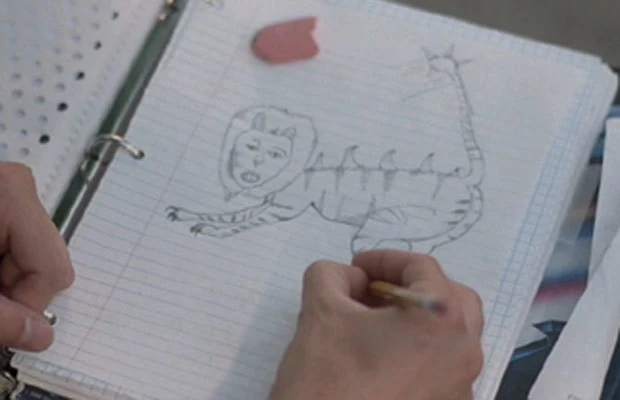
So technically, Ligers are not the largest cat species; they are a hybrid offspring, and they are indeed the largest extant feline organisms, but they are not the largest species in the world. The largest cat species is, in fact, the tiger – not that I’m bitter or anything.
Admittedly, I dropped the issue long before I went into the above rant on the difference between hybrid offspring and species; I had nothing to gain, and I didn’t want to be meanspirited. But it bugged me, and my trust in their trivia felt betrayed.
Side note: how a quizmaster responds in an ambiguity dispute is just as important as avoiding the ambiguity all together. A common but thoroughly unrewarding response is the unsophisticated “I said so” response, or the variant “that’s what it says on the card”. This is a poor response because asserting hierarchy rather than asserting knowledge is antithetical to good trivia; it reeks of insecurity and it’s usually a sign that the quizmaster’s commitment to trivia is shallow and thoughtless.
A better response is to check to the quiztaker’s answer against the question to see if it is valid. If the answer doesn’t quite fit the prompt, give a justification, but if the answer is valid, give the quiztaker a point with a mea culpa. This creates a relationship of trust and rewards players for thinking outside of the box.
So, yes, in short the quizmaster is responsible for ensuring that the correct answer is as unambiguous as possible. It’s a simple rule, but it’s a lot more complicated to followthrough on than you might think. Usually, making the questions more detailed and providing more ways to find the correct answer (see Rule #2 and Rule #7) solves this problem, but not always.
My favorite ludicrously complicated example of a question that by all appearances should have been unambiguous, but wasn’t, came at my go-to trivia spot, the Lookout.
The quizmaster asked a question along the lines of, “What Polish nobleman served in both the Polish-Lithuanian Commonwealth Army and the US Continental Army, obtaining the rank of Brigadier General, led a revolution in his home country, and is now regarded as a national hero in the United States and Poland?”
The moment I heard that question, I froze in horror. Not because I didn’t know or had forgotten the correct answer, but because by happenstance I could think of exactly two individuals who almost exactly fit that same weirdly specific description: Casimir Pulaski and Tadeusz Kosciuszko!
I kid you not: they were both Polish; they both served in both the Commonwealth Army and US Continental Army; they both obtained the rank of Brigadier General in the US Continental Army; they both led two different revolutions in their home country (Casimir Pulaski led the Bar Confederation Uprising; Tadeusz Kosciuszko led the creatively named “Kosciuszko Uprising”), and they are both regarded as national heroes in the United States and Poland!

That’s absurd.
The main difference was their timing; Casimir Pulaski already served a long career in the Polish-Lithuanian Commonwealth Army as a cavalry commander, and he sought employment with the Continental Army because he was exiled as part of his involvement in the Bar Confederation Uprising. In fact, he died fighting for the American cause in the Battle of Savannah.
Tadeusz Kosckiuszko, by contrast, joined the US Continental Army as a romantic but inexperienced revolutionary galavant, and proved himself a talented military engineer. He then returned to the Polish-Lithuanian Commonwealth, seasoned by his service under George Washington but no less romantic in his revolutionary ideals, and participated in several military actions with the Commonwealth Army – most notably leading the Kosciuszko Uprising against Russian domination in Eastern portion of the Commonwealth.
Scenarios like these are incredibly rare – at least if they’re purely accidental – so I didn’t hold it against the quizmaster. But it does emphasize that making questions with truly unambiguous questions is a lot harder than it looks.
Rule #5: Challenge
Like most competitions, trivia becomes fulfilling by providing challenge. That’s not an open invitation to be punishing, but it is an invitation to press the quiztakers to work hard for the answers.
Many quizmasters think that they can broaden the audience and make it more approachable and enjoyable by making the trivia easier – but this is at best a short-term gain and comes at the cost of a long-term fulfilling experience. Yes, when you first start out playing trivia, you get a temporary high for every question you get right and a temporary low for every question you get wrong. If that enjoyment were static, then yes, easier quizzes would be better. But for people who like me are more dedicated to trivia, the enjoyment comes from overcoming a challenge and by thinking at a high performance level – and that experience does not come from easy questions.
Before I went to the Lookout, I went to a different pub trivia near where some family friends lived. Initially, I joined them in playing trivia, but gradually they stopped coming due to their schedules, and I often showed up by myself.
I still went, because I really wanted to play trivia, so logically I should have just joined up with another team – but I was also very shy, and anxious about joining a random team, so instead of doing the reasonable thing I played trivia by myself – against several teams with up to six people (occasionally more).
But after a few times of playing trivia by myself, I realized a big problem; and no, it’s not the obvious one that showing up repeatedly to do trivia by myself because I’m too nervous to ask a new team is really sad and pathetic. I knew that one straight away.
No; the big problem is, I was doing way too well.
By myself, I usually ended up in the top three teams. And several times, I actually won. By myself.
The first time I won by myself was a moment of excitement and pride. I was really happy about it.
The second time I won by myself, I was mostly just shocked – it was a night I thought I did really poorly, in fact, and I was sorta prepared to leave after I turned my scores in and only stayed out of morbid curiosity. (It turned out everybody had a shitty night!)
The third time, I knew. Before I even turned my scores in, I just knew. I knew I got first prize, and I felt that I owned it.
And that was the moment I decided I needed to find a different trivia spot – one that offered more challenge. Because I am a person who is competitive with myself, and I knew winning that trivia – even by myself – would no longer be fun and rewarding after that third time.
I wanted to improve, to learn and to grow, and that requires challenge. That’s what the quizmaster should want of their audience, too. A pub trivia shouldn’t have to pander to the insecurities of novice quiztakers; it should challenge the toxic fixed mindset that asserts that people are precisely as intelligent as they’ll ever be and won’t get batter. Fuck that nonsense; there are better, more enriching ways to make a quiz enjoyable than giving away cheap correct answers. I want to struggle and strive and feel that I earned my success; and providing that well will earn the quizmaster my loyalty. (It’s pretty rare, I’ve found.)
Rule #6: Non-Pedantry
Let’s disabuse a common misconception about trivia: trivia is not about pedantry. It should never be about pedantry. Pedantry is the antithesis of good trivia.
And I know I write that after I complained at end about how Ligers were not technically a species, but here me out.
If you are a curious person with a solid foundation of knowledge, trivia should be an empowering experience. Pedantry, on the other hand, smothers curiosity and leaves their audience feeling disempowered. Giving quiztakers a question which demands an unreasonable level of detail, or which can only be understood with the type of information that is inaccessible or disengaging to the general public, will annoy and humiliate most of the audience.
I think most people will agree with this conclusion but – again, somewhat ironically – the details get complicated, and ultimately what’s pedantic and not is subjective, and depends on what kind of knowledge the audience values.
For example, I personally don’t like questions which ask me for the exact year a historical happened – and I say that as someone who is actually pretty good at remembering historical dates. It feels arbitrary and unfair unless the question provides information to zero in on the answer, such as a “Presidential election” year. (The worst are multiple choice questions that only reinforce the unreasonable granularity; e.g. for the question, “What year did Napoleon win the Battle of Austerlitz?”, the multiple choices “1804, 1805, 1806, 1807” is a terrible spread of answers, compared to “1794, 1799, 1805, 1812”.) On top of that, it usually takes a hell of an event for the year itself to be distinctly tied to it for its cultural import (e.g. 1066, 1492, 1776, 1789, etc.). In any case, there’s usually a better version of the same question that emphasizes the content rather than the year.
On the other hand, I personally think the correct use of the scientific term ‘species’ is not overly pedantic and is likely to throw people off, as it did me. Then again, the barista might disagree. And maybe that’s okay.
You’ll notice that there is a tension between the principles of rule #5 and rule #6; one condemns vagueness, and the other condemns persnicketiness. Again, I argue it’s a productive tension; striking the right balance will keep the quiz focused on the right details, and make the quiz more engaging.
As a rule of thumb, I suggest focusing on the details you find most significant, and try to recognize any other ways in which the audience can interpret the question. Then, lean on the audience to bring in their own detail attention if they choose to. Who knows? As the quizmaster you might learn something valuable.
The important thing, though, is making question answers accessible to people who have a broad range of knowledge and a requisite amount of curiosity. Even if they don’t get it, you want them to think they might have gotten it, without resorting to tedious cataloguing.
Rule #7: Multiplicity
Bear with me: I’m about to go on a very long tangent…
…Let’s return to the topic Jeopardy!’s most well-known and identifiable gimmick: answering in the form of a question.
Jeopardy! is obviously a venerable institution and a touchstone of virtually all trivia lovers in the United States and many abroad, but I do have a problem with its famous rule: if you think about it, the gimmick of answering in the form of a question is… well, it’s bullshit.
For those who don’t know, the “form of a question” comes from a key part of Jeopardy! history. In the 1950’s, television offerings in the United States were stuffed with panel and game shows, largely because they were relatively cheap to produce. When the US Supreme Court (yes, the literal SCOTUS) ruled that quiz-based shows were not a form of gambling in the case FCC v. ABC (1954), quiz shows emerged in force in the mid-50’s.
However, multiple broadcasters made the format competitive, and prime time shows like The $64,000 Question and Twenty-One fought hard distinguish themselves and attract viewers.
They first hit upon the idea of raising the stakes with high value grand prizes, which was a profound innovation which still influences (i.e. infects) the way reality-based shows are marketed. But once the stakes were raised all around, the shows started looking for a new competitive edge.
Eventually, producers turned to promoting personalities and the drama therein. Viewership grew with recurring contestants that audiences could identify and cheer for. But hold on; trivia is a competition, not a scripted television show. You can’t control who the recurring contestants are; that’s tantamount to controlling who wins and loses, and that would violate the fairness and integrity of the quiz, and its pretenses to reality. And I mean who would script a reality show to exaggerate the drama? That would be unthinkable, right?
Right?
Yeah, so in 1958-59, a bunch of people came forward and confessed that the television quiz shows were completely rigged. Most notoriously, the game show Twenty One engineered a long winning streak for Herb Stempel, a scrappy working class Bronx resident, only to force him to throw a match against Charles Van Doren, a handsome high society Manhattanite academic with a MA in Astrophysics and a Ph.D in English from Columbia University, so that the producers could choreograph an even longer and high profile winning streak for Van Doren. (This was notably dramatized in 1994 film Quiz Show.)

The fallout of the Quiz Show Scandal was swift and harsh. US Congress held hearings and introduced legislation to ban the fixing of game shows, since this was a long ago era when Congress could be moved to action by public outcry – even on something seemingly trivial (pardon the pun). Sponsors dropped quiz shows after public backlash, and most dedicated quiz shows in primetime were off the air by 1960, leaving scripted television and celebrity panel shows like What’s My Line to pick up the slack.
Now the appeal of trivia will always be strong, but by the early 60’s, the brand of quiz shows were tainted, and conventional gimmicks like large prizes only reminded audiences of the corrupted, dishonest shows of the 50’s. To produce a new quiz show, it would need something completely different; a format that the audience had never seen before, which would noticeably distinguish this show from its ignoble predecessors, while still keeping it a quiz show.
And this is when Julann Griffin, wife of Big Band crooner-turned-Game Show Host-turned-aspiring television producer Merv Griffin, struck upon an idea which possibly saved trivia on US television, even though I admittedly think it’s quite silly:
“Hey! What if we turned the quiz show upside down? We could give the contestants the answers, and they’d have to come up with the questions!”
And this, in a nutshell, was the original pitch to NBC for the show that would become Jeopardy!. This simple change allowed the show to present itself to television audiences without being mistaken for the fraudulent quiz shows of the 50’s. Jeopardy! premiered in 1964, it’s still going strong today and it has been recording new episodes for 47 of the 55 intervening years. It’s beloved, wildly successful and a paragon of good trivia practices.

So if the question format rule was necessary for Jeopardy! to get green-lit, and the resulting show has been a pillar of daytime TV for five decades, I must think the question format rule is a good idea, right?
No, of course not! The only reason it works was to reduce the rule to a facile gimmick and to build good practices around it.
Why? Let’s think about what providing an ‘answer’ and asking for a ‘question’ really means. Unless it were handled with extreme care, it would violate the fundamental rules of trivia.
To illustrate, suppose I asked, “How many feet are in a mile?” Naturally, the correct response would be “5,280.” What happens if you reverse it? The prompt or ‘answer’ is “5,280”, and you have to come up with the ‘question’.
Yes, “How many feet are in a mile” is still a correct solution. But it’s not the only solution. In fact, there are a theoretically infinite number of questions for which “5,280” is the correct answer. “What number is an example of a j-invariant and a Heegner number in theoretical mathematics?” “What is a Denver-based city magazine?” “What is 2*2*2*2*2*3*5*11?” “What is 5279 added with 1?” And so on.
Then there’s the challenge of enforcing a real, meaningful question. Contestant can’t just focus their energy on identifying the correct answer; they also have to spend energy on the the grammatically correct question. That takes time, and time is precious both for contestants and broadcast television.
In order to make this gimmick remotely work, Jeopardy! quickly threw out the grammatical rules; you could respond with any question form, whether it was technically grammatical. Then, they had to frame their prompts around a simple and thoroughly practical yet often neglected principle of trivia: the quiztaker should be presented with multiple pieces of information pointing to the correct answer – or, in the case of Jeopardy!, the correct “question”. I call this principle “multiplicity”.
Using two or more distinct pieces of information to point toward the same solution is a simple and elegant to focus a prompt on a unique solution – sorta like how two infinite lines with different angles must converge on a solitary point. This practice was one of the best that Jeopardy! popularized, and it’s partly why the trivia remains so solid and engaging: if done right, it can give the audience more than one way to identify solution, and other means of assessing the answer’s credibility.
Thing is, Jeopardy! struggled to adapt multiplicity in their “answer as prompt” format. They tried early on; in the 60’s their “answers” sorta sounded like actual answers and their “questions” sounded more like actual questions. To give one example from a 1968 broadcast: the ‘answer’ was “A type of ship that was the largest in the British Navy at the time of Henry VIII”, and the ‘question’ was “What is a Galleon?”. If you squint, that answer does sound like a vaguely reasonable response to that question.
By the 70’s, the pretense that the prompts were supposedly answers was mostly sidelined, in favor of the flexibility to keep the solutions simple, and the prompts dynamic and multi… multipli… “multiplicitous”? Sure, let’s go with that.
To provide an example from 1975: the ‘answer’ was “John Wayne introduced this Western to TV viewers nearly 20 years ago”, and the ‘question’ was “What is Gunsmoke?” I don’t think people would mistake the prompt for a natural, organic response to the question “What is Gunsmoke?”
Today, at this point in the show’s evolution, the pretense that the prompts are “answers” is virtually abandoned in its entirety, and it’s only reflected in the “answer in the form of a question” rule, which is just a gimmick and nothing more.
Let’s just be upfront: currently the prompts on Jeopardy! are questions in everything but rudimentary grammatical style, and the rare instances where they do work as ‘answers’ are purely accidental. Furthermore, the solutions are intended as the answers to those questions, and Jeopardy! doesn’t even bother enforcing them to be grammatical so long as they are technically questions. Pretending that they’re otherwise is absurd.
To use a recent 2019 example: if I asked you, “Who is Napoleon?” and you replied, “Ignoring this commander’s experience 129 years earlier, in the winter of 1941, the Germans attacked Moscow”, I wouldn’t think that’s a good answer; I’d think you were a raving lunatic.
No; Jeopardy! is popular because they are good, dynamic, well-constructed trivia questions, for appropriately simple answers. That is the practice you should implement in your trivia, and a good way to do so is adding multiplicity into your questions.
Here’s an example I remember fondly from The Lookout: the round’s theme was “Marys” and the question was as follows: “Serving as the country’s first female President from 1990 to 1997 before stepping down to become the High Commissioner of Human Rights for the UN, what Irish politician used a Simon & Garfunkel song as her campaign theme?”
Now, our team was acquainted enough with Irish politics to know the first female President of Ireland was Mary Robinson. But what stuck with me was the way the question provided multiple paths to find the same answer – if you knew how to use the information in front of you.
Suppose, for example, you didn’t know anything about Irish politics, or female Presidents abroad, or the governance of the UN. You still probably know some of Simon & Garfunkel’s famous songs, and you know the theme of the round is about Marys. If you used these two details correctly, you actually have a moderately decent shot to guess the correct answer.
Because the theme was on famous Marys, you might be able to infer that the answer has to relate to the theme since the question did not. You also might be able to infer that the Simon & Garfunkel song in question also relates to the answer’s name, since the quizmaster conspicuously didn’t mention the song’s title. There is a chance that you can combine these facts and guess that the politician’s name is most likely Mary or some variant, and her last name is possibly Robinson, based on Simon & Garfunkel’s landmark song “Mrs. Robinson”. Without knowing anything about Irish politics, the question still provides a way for the quiztaker to get engaged and persevere to a correct answer – but it’s by no means obvious or guaranteed. (Maybe they guess “Mary Cecilia”, or “Rosemary Sage” based on “Scarborough Fair”.) Furthermore, it provides teammates who are on the fence a way to be more confident in the correct answer, by crosschecking a hunch that it’s Mary Robinson against Simon & Garfunkel tunes they know.

In summary, multiplicity is a way to follow through on Rules #2, #3 and #4 without compromising Rule #1. That’s why it makes good trivia.
Rule #8: Social Play
When I use the term social play, I mean the organic phenomenon of cooperation and coordination among teammembers to complete a challenge – in this case, answering a trivia question. This is more than just having multiple teammembers to statically increase the odds that one of them will have the right answer; it should also requires that teammates cooperate and communicate to extract not just additive benefits but emergent benefits from their shared information. They should see a real advantage in sharing infromation, discussing, working through the reasoning and building consensus in order to conclude on an answer. This is a large part of what make pub trivia such an enjoyable social activity and a large part of what others miss when they think it’s just inebriation and test-taking.
I can keep this brief, since in some ways, social play is practically a litmus test for the other rules – especially Rule #2, #3, #5, #6 and #7. If questions are engaging, if the quiz rewards the prudent use of a broad set of knowledge, if the quiz is challenging, if the quiz is not pedantic, and the quiz embraces multiplicity, social play should emerge organically. Conversely, the absence of social play is also a symptom which can be used to diagnose lacking trivia practices. Maybe there’s no benefit to social play because the quiz is too easy. Maybe pedantry has discouraged social play by making the required information too inaccessible and arbitrary. Or maybe the quiz lacks the breadth of information to provide multiple ways to reach the correct answer. In any case, social play is a useful barometer of quiz quality – assuming your quiz format is team-based. And getting a correct answer through social play is often one of the most rewarding experiences of trivia.
One time, we received a question which went as follows: “The French call the potato pomme de terre; similarly, the Dutch call the potato what?”
My teammates and I felt a little out of our element, since none of us spoke Dutch. However, my teammate did have some background in French, and could confirm that ‘pomme de terre’ literally meant “apple of the earth/ground”, so we inferred that the Dutch word for would probably be similarly constructed.
After some more pondering, I vaguely recalled that the Dutch word for the fruit orange was sinaasappel or “China apple”, so based on that I said the answer was going to be something-appel, parallel to pomme de terre. What I didn’t know, and couldn’t really guess, is what the Dutch word for “earth” or “ground” would be.
After answering a few more questions, my teammate similarly recalled that the name Aardvark, the African anteater species, derived from the Dutch/Afrikaans for “Earth Pig”, where aard was likely the Dutch root for “earth”. (This also made linguistic sense, since Dutch and English are closely related, and aard bears a striking etymological resemblence to the English “earth”.)
Based on that and that alone, we put down “aardappel” as our shot-in-the-dark best guess after some prolonged deliberation with little certainty and crossed our fingers.
And I’ll be damned, it turned out to be 100% correct. We were ecstatic; the thrill of managing to extract such a correct answer by putting together our sparing and disparate pieces of information was equal to that of winning the whole game.
Rule #9: Themes
Let’s talk about round themes. It’s common practice, yet it’s counter-intuitive when considering the other rules.
Ultimately, trivia themes are a high risk/high reward tact: if used well, themes can greatly enhance the interest and enjoyment of a game; but if used poorly, they can alienate a large portion of the audience and feel unfair.
So why are they so popular, and what makes the difference?
Well, themes are popular because trivia is a brain game (shocker), and brains are generally fascinated by novel connections between pieces of knowledge. Themes provide us with patterns that organize the information we’re consuming and prime us to find a new connection. They engage us, inspire our creative thinking, and make the round more memorable.
However, there is a big caveat: themes must be used well. If used poorly, they can have the opposite effect. They can make the audience disengaged, discouraged and apathetic – the reverse of what they should achieve.
In short, themes in particular must be applied with the other rules of trivia in mind; if not, they can be a negative influence that breaks the rules, particularly #3 and #6. Bad use of themes can make a round too narrow and too pedantic to be engaging, and if they try to make the information more accessible to general quiztakers, it risks making the quiz too easy.
Good round themes, in my view, should be flexible enough to draw from multiple types of knowledge (see Rule #7) and provide quiztakers a tantalizing clue to help them on a tough question: for example, “Hot and Cold” (where the question or answer is related to the words ‘hot’ or ‘cold’) or “You don’t know Jack” (where questions or answers are related to the name “Jack”). Bad round themes force the player to draw on only one type of knowledge, and punish anyone who doesn’t have knowledge in that area: for example, “Sons of Anarchy”, “National Hockey League”, “The Thirty Years War”, “Keeping Up with the Kardashians”, and so on.
There are two slight nuances, though: the first nuance is that you can get away with more narrow round themes if you can narrow your quiztakers accordingly – e.g. it’s okay to make a “RuPaul’s Drag Race” or a “Star Trek” themed trivia night, if that is how you publicize it and entice audiences to come. That’s a good way to celebrate and reward a quirky fandom. But you have to make sure this is clear and well-understood to everyone who would come.
One time, I went to my regular trivia spot (before the Lookout) only to discover that it had been taken over by an Audubon Society themed quiz – and it started about a half-hour earlier than the usual trivia time. This was advertised to local audubon members, but not to me. So when I showed up, the quiz was already under way, and I was too late to join any teams. So I instead opted to do it myself, on a quiz topic I frankly know very little about.
Lo and behold, I wasn’t the only person who made the same mistake, and the other guy and I ended up doing a chug off to determine last place. It was a humiliating experience.
The second nuance is that clever quizmasters can take a round which seems comparatively narrow and inaccessible, and transform it into a topic that draws from more broad pieces of information that’s more interesting.
At the Lookout, the requested round for one week was “20th Century Boxers”. Taken at face value, that’s not a great topic; it’s too focused on knowledge of a sport which most people have just a basic acquaintance with. (Like, they probably know about Muhammad Ali and Mike Tyson; they might know about Joe Frazier, George Foreman and Joe Louis; but Floyd Patterson? Jack Dempsey? What are the chances the average person could distinguish Sugar Ray Leonard from Sugar Ray Robinson? Or Rocky Marciano from, well, Rocky Balboa?)
But the quizmaster decided to get clever; instead of having the questions be about 20th century boxers, he told us that the answers to the questions would all be the nicknames of famous 20th century boxers, even while the questions were about something else.
For example, there was a question along the lines of “This Namco-produced 80’s classic arcade video game was reportedly inspired by the shape of a pizza pie that was missing a few slices?” The answer, naturally, was “Pac-Man” – nickname of Filipino boxer Manny Pacquiao.
Another question: “Often regarded as his signature song, what famous tune did John Lee Hooker play while performing as a street musician in South Side Chicago in the film Blues Brothers?” The answer is “Boom Boom”, also the nickname of lightweight boxer Ray Mancini.
This is an example of using a theme not as a restriction on the knowledge, but rather as a jumping off point; having personal knowledge about boxers in the 20th century would help you in this category, but not so much that you’ll leave everyone else in the dust. Meanwhile, people who don’t know much about boxing can still rely on the normal question/answer, and they can still get it correct.
I really like this approach; it’s more creative, fair and interesting than playing the round straight.
So feel free to use themes, but make sure that it isn’t at odds with the other rules. And always be on the look out for ways to throw a curve ball and use a theme in an unexpected way.
Rule #10: Fun
And finally, the most important rule of all; the ultimate goal, the one which all the other rules are designed to contribute to. It is also the only rule which you can cite as an excuse for deliberately compromising or even breaking any of the other rules: fun.
Never let it be forgot: we are here to have fun. Trivia is supposed to be fun. We do trivia because we think it is fun. And if one of the aforementioned rules get in the way of a question you think is fun, feel free to chuck it out the window for the sake of rule #10, and a hardy F-U-N.
Easy enough, right? Got it? Good.
But…
I am a firm believer that quizzes should be fun in themselves, because (I contend) good trivia is inherently engaging to its audience. For that reason, I take issue with trivia formats that try to force in frivolous elements to add “fun” factor into quizzes, when they ultimately distract from the trivia itself. The Geeks who Drink pub trivia has a bad reputation for this practice, but the most infuriating example to me personally is HQ Trivia – the mobile app-based trivia game that gained a lot of traffic in 2017 for the novelty of prize money but which felt like a miserable chore to me. Why? Because every time I loaded up the app at the specific time they asked me to, I had to put up with the blithering, try-hard, “whacky” hosts and their limp and grating attempts at improv comedy that insult the intelligence of their audience. And they draw it out to an excruciating length, filling the space between questions with raw pain. It all seems to come from this assumption that trivia is dull and they need to compensate for it with “media personality” but I AM HERE FOR THE TRIVIA! STOP GETTING IN THE WAY OF THE GODDAMN TRIVIA!!!
Anyway.
If you want to make a quiz fun, I ask that you contextualize fun with the following principle, which I call the “curiosity principle”:
- The Curiosity Principle: The fun in trivia should come from the curiosity and opportunity for learning, and the embrace of knowledge as an ends in itself – rather than a means to an end.
This principle should be the heart and soul of the fun in trivia. Beyond that, it’s what makes trivia a valuable and useful exercise.
All too often in our daily lives we are compelled to “justify” our curiosity and demonstrate that knowledge is a means to an end. That’s how we frame education, and that’s how we frame work. Our culture tends to mock people who have a passion for knowing a subject for the love of it rather than its usefulness are mock: those people are geeks or nerds, and treats that behavior as aberrant. I firmly believe that this attitude is destructive, both spiritually and concretely; it smothers our ability to take joy in life, and it atrophies our ability to learn. And when the time comes when learning is important, and is useful, people who have internalized this attitude will not learn as well, and their confidence in their ability to learn will be diminished. This is an attitude for which pub trivia is a perfect antidote: a space of joy that permits you to be curious and to love learning.
One thing that breaks my heart is inviting my friends and family to pub trivia – this thing that I love – and see them enjoy themselves, only to hesitate returning because they “don’t feel like they can contribute” since they’re “not good enough”.
This seriously bothers me. I love their company; I invite them for their company; but they can’t see why I’d want them to join me if they don’t significantly increase my odds of winning.
They just see trivia as a means to an end; I wish they could see it as an end in itself.
And when people try to distract from it with razzle dazzle, it’s they’re tacitly denying the possibility of that kind of fun: the thrill that comes from the effort of wrangling an answer from bits of shared knowledge, or the satisfaction of getting a question right on a calculated guess, or even the interest in discovering the answer to a question you know nothing about. Those wrongheaded quizmasters cling to this subtext that to make trivia more fun and enjoyable, it requires less trivia, to make it more approachable.
That’s just wrong; the audience for trivia is wide, and most people have the potential to enjoy it if they entered with the right mindset. And I hope quizmasters take it on themselves to fuel that enjoyment with their trivia.
So there you have it; my ten rules of pub trivia. Feel free to comment if you disagree or if you want a clarification. In the meantime, I need to remember how to write shorter blog posts.

Never with a Simple Answer,
Connor Raikes, a.k.a. Raikespeare
 Raikespeare's Corner